design
ResMed CPAP Travel Adapter
A 3D printed adapter allowing patients to use their existing mask with the ResMed AirMini travel CPAP.
Year
2026
Technologies
3D Printing, CAD, Product Design, Medical, Prototyping, ABS-GF
CPAP users who travel face a frustrating choice: lug a full-size machine or buy a portable unit and an entirely new mask to go with it. The ResMed AirMini is a compact travel CPAP, but it uses a proprietary connector between the humidifier and hose that is incompatible with standard masks. ResMed's solution is to sell a dedicated travel mask for around $150 AUD. For people who have spent months finding a mask that fits comfortably and seals well, starting over with a new one is a poor option.
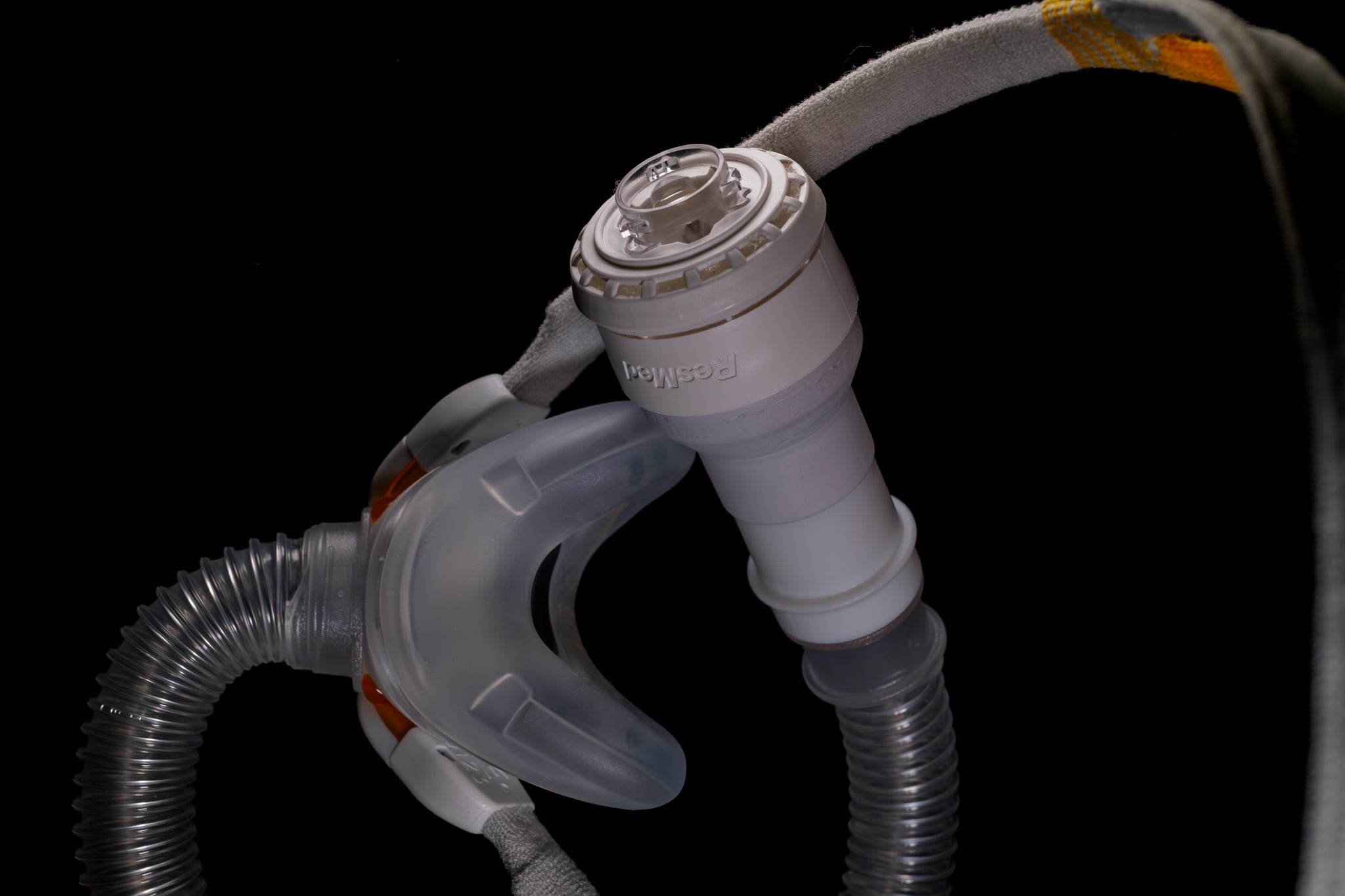
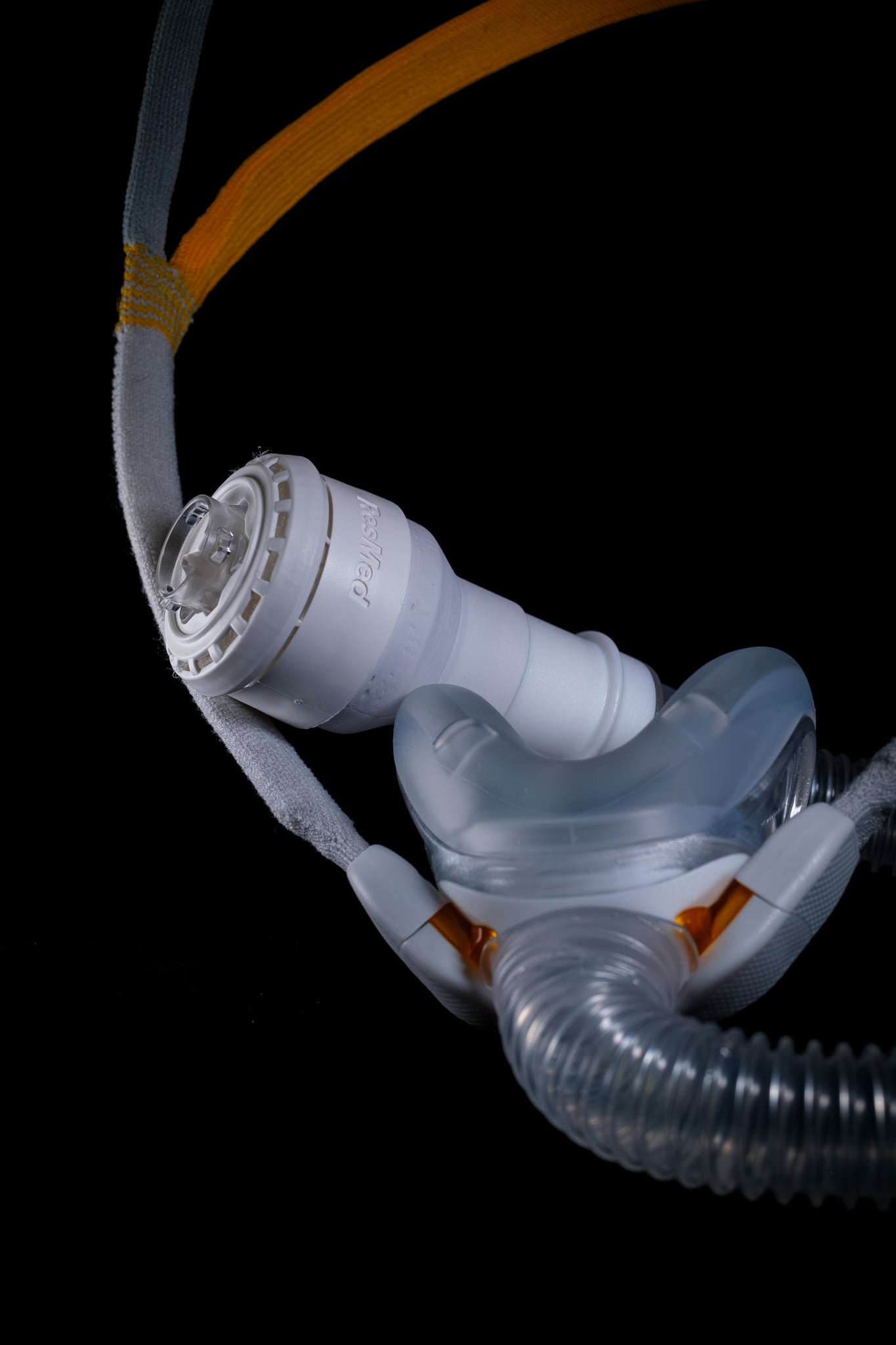
This project designed and manufactured a small adapter that bridges the gap between the AirMini's HumidX humidifier outlet and a standard CPAP hose, letting patients keep using the mask they already own.
The Problem
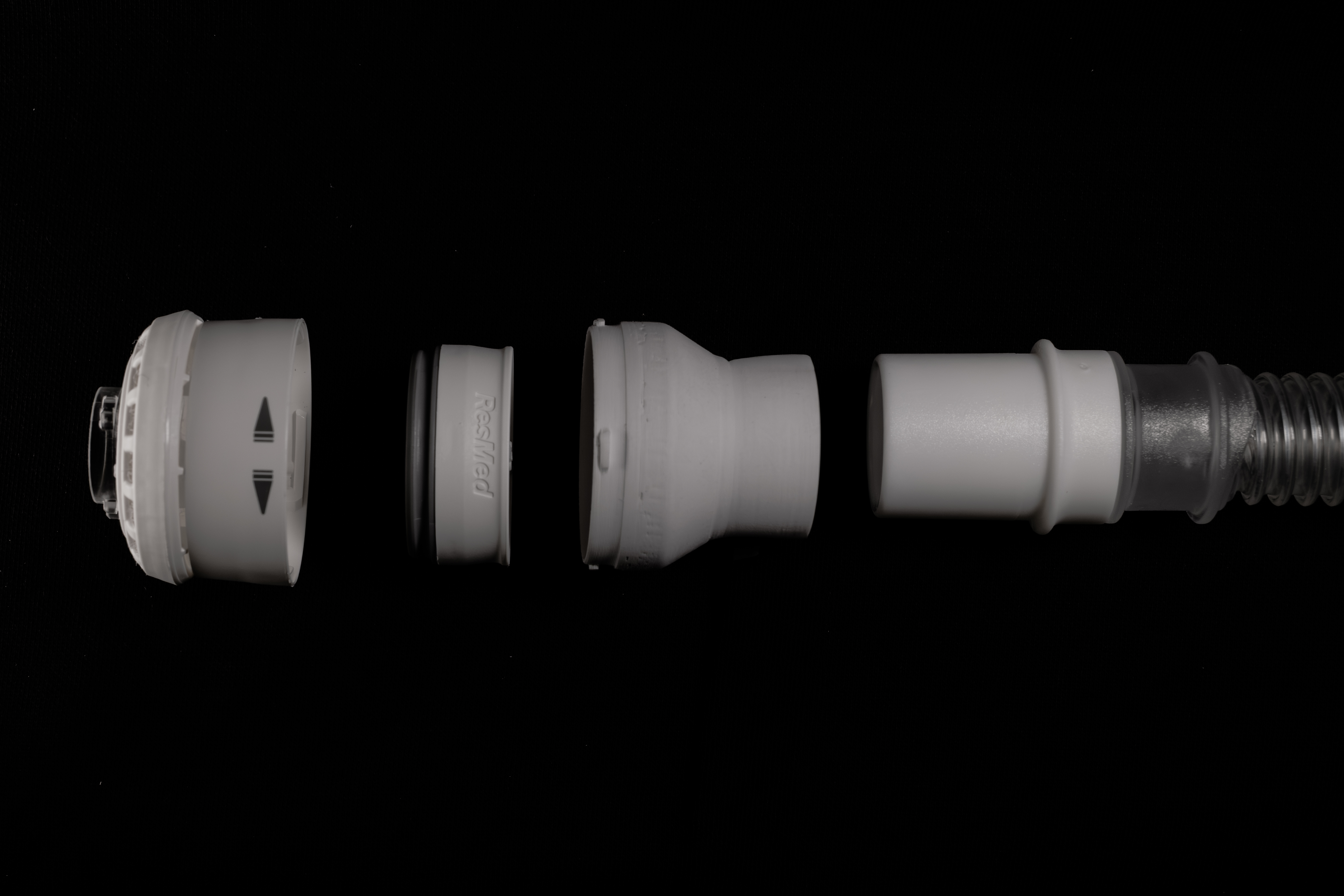
The AirMini has a different connection that isn't compatible with the HumidX humidifier. Standard CPAP hoses use a universal 22mm connector. ResMed sells a complete mask kit for the AirMini, but for many users the comfort and seal of their existing mask is hard to replicate. The adapter needed to:
- Friction-fit securely into the HumidX outlet without air leaks
- Accept a standard 22mm CPAP hose on the other end
- Withstand nightly use in a warm, humid airflow
- Be small and light enough to not stress the connection
Design & Prototyping
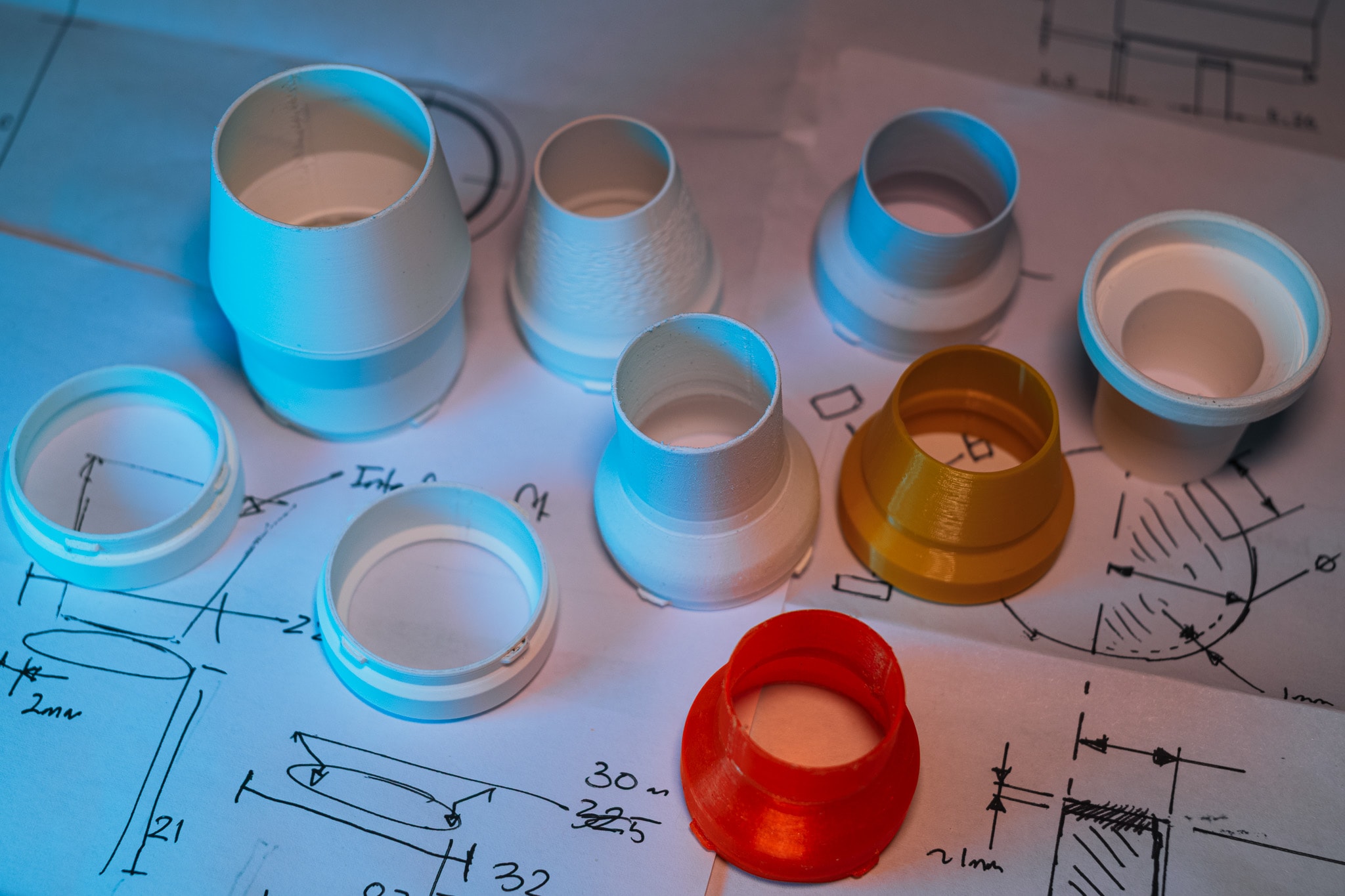
The adapter was modelled in CAD after measuring both the HumidX outlet and standard hose connector with digital calipers. The geometry is deceptively simple (a tapered cylinder with two different internal diameters) but the tolerances are tight. A fraction of a millimetre too loose and air leaks destroy the therapy pressure. Too tight and the adapter won't seat or risks cracking the HumidX housing.
Multiple prototypes were printed to dial in the fit. Early iterations in PLA were dimensionally accurate but too brittle and not suitable for the warm, moist environment inside a CPAP circuit. PETG improved on moisture resistance but lacked the rigidity needed for a reliable friction fit.
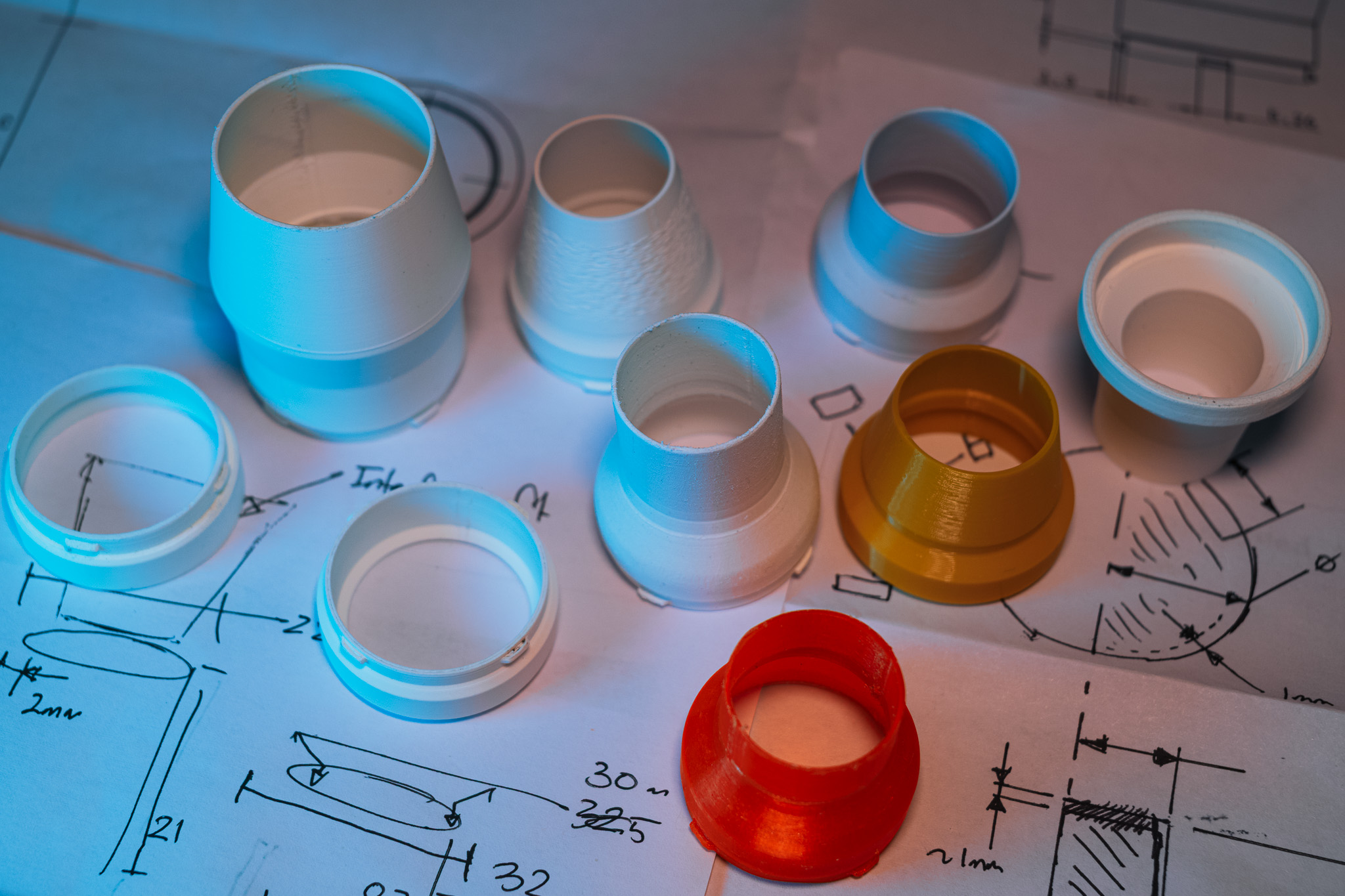
The final production material was ABS-GF (glass-fibre reinforced ABS). It ticks every box: rigid enough to maintain tight tolerances, resistant to the temperature and humidity of heated CPAP air, and strong enough to survive being connected and disconnected repeatedly.
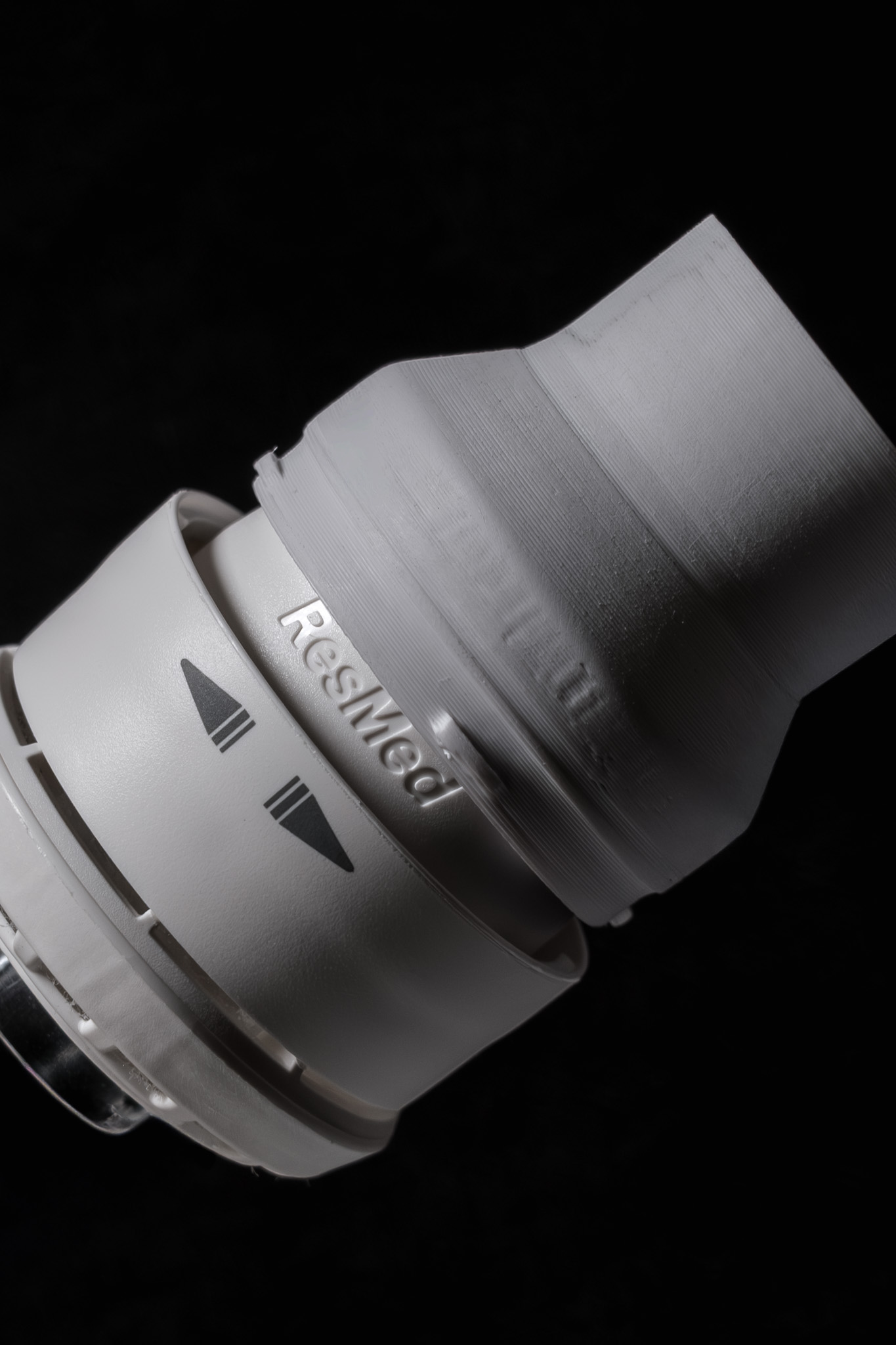
The Final Product
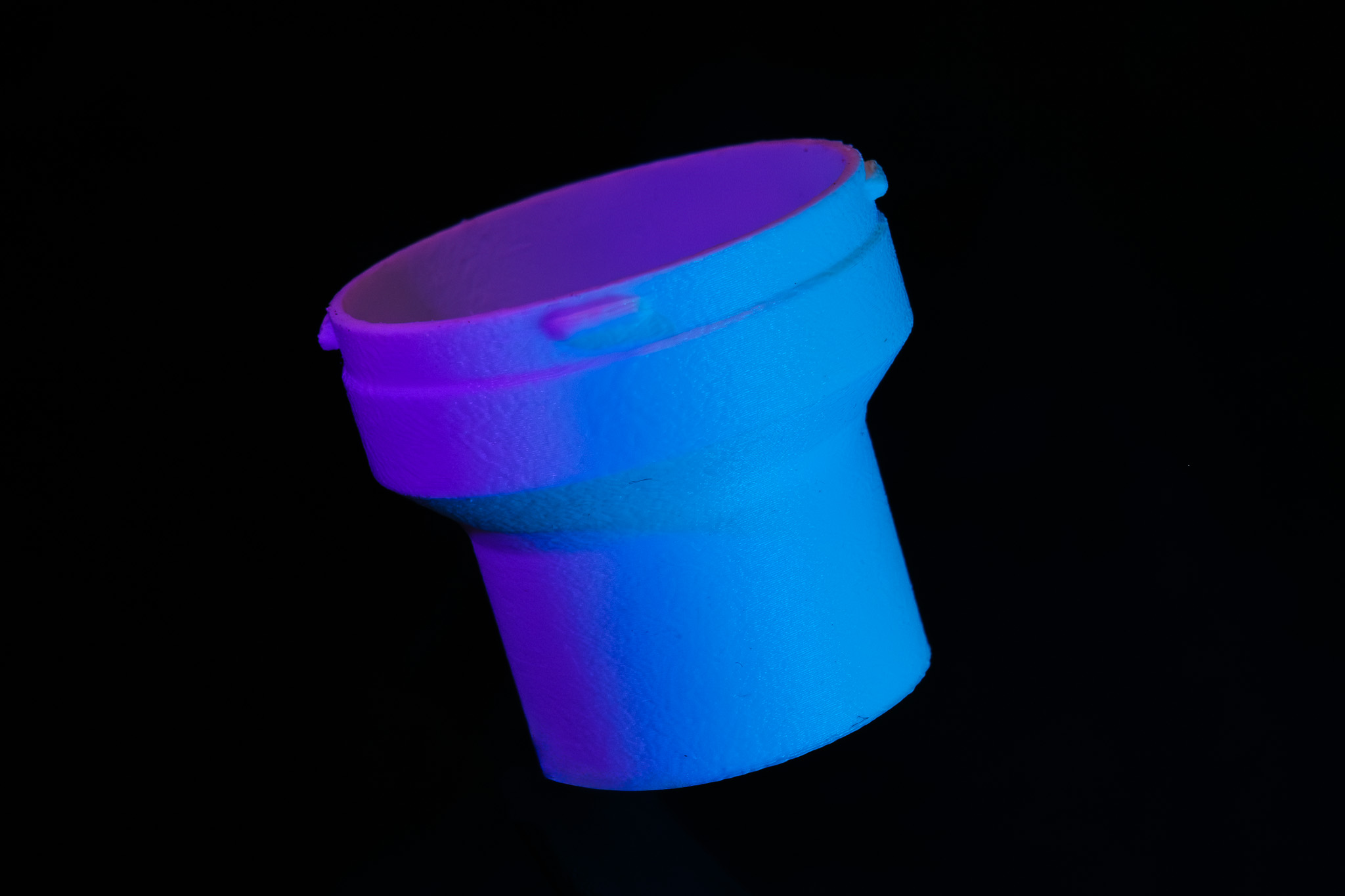
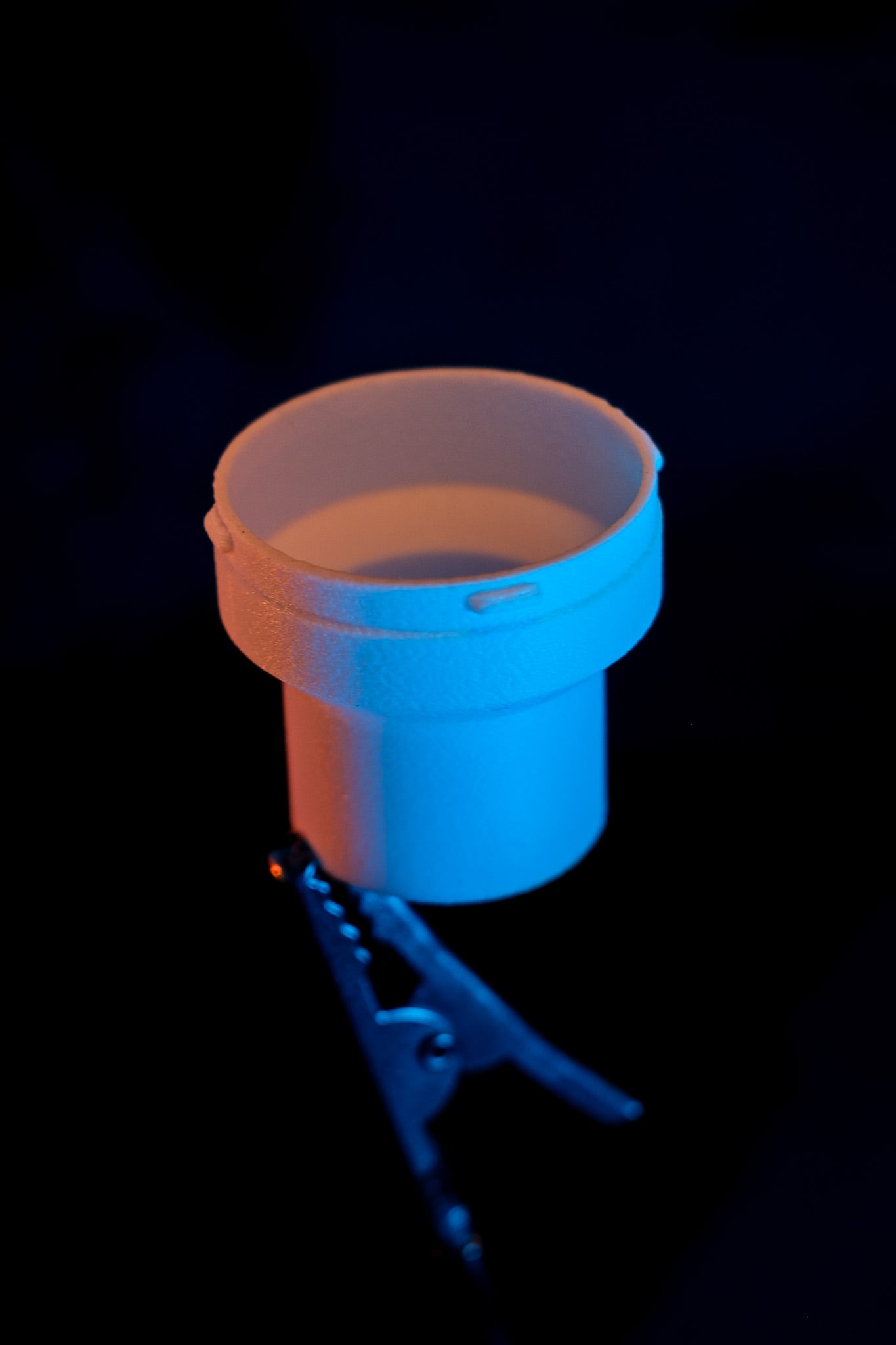
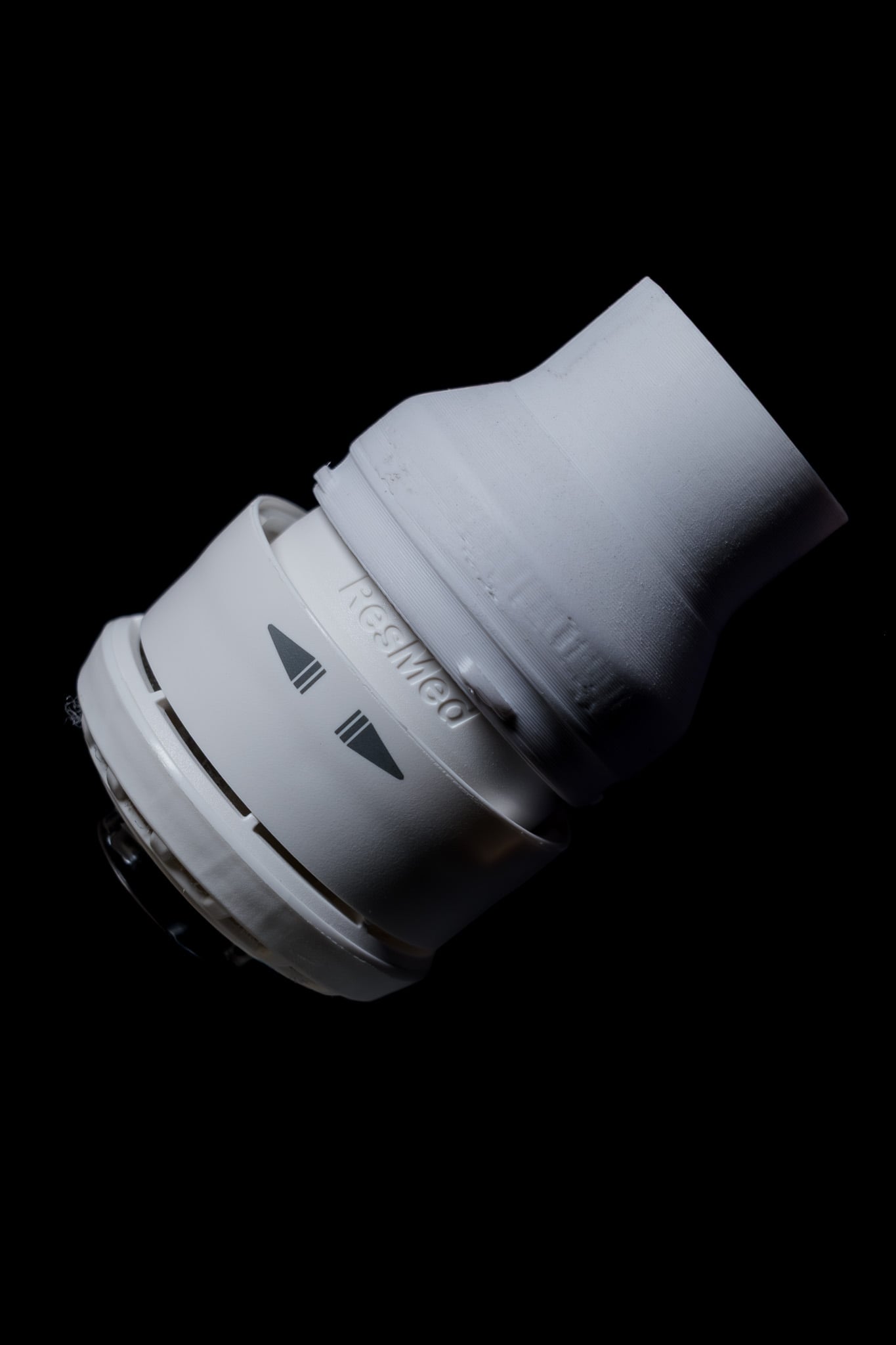
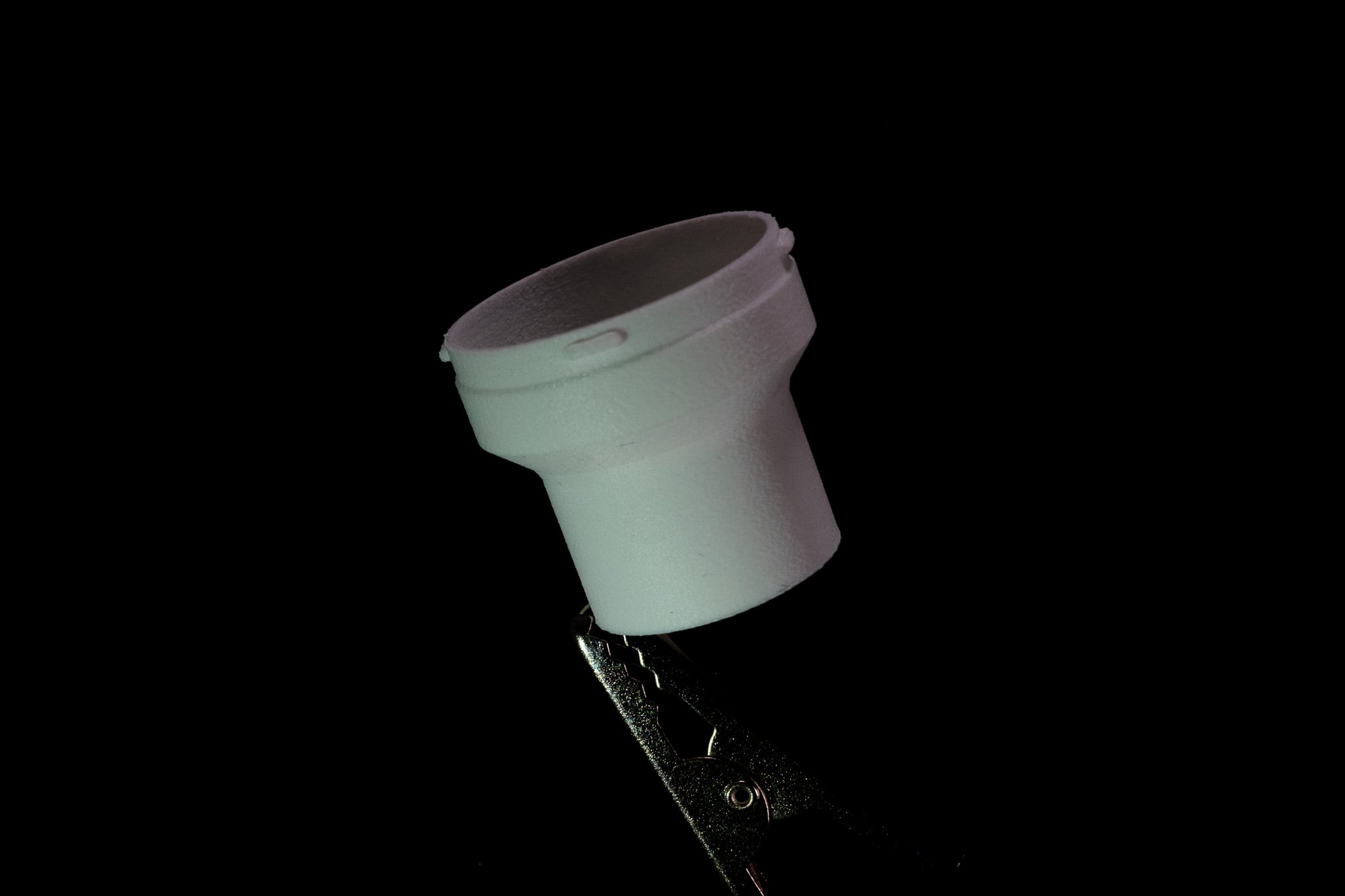
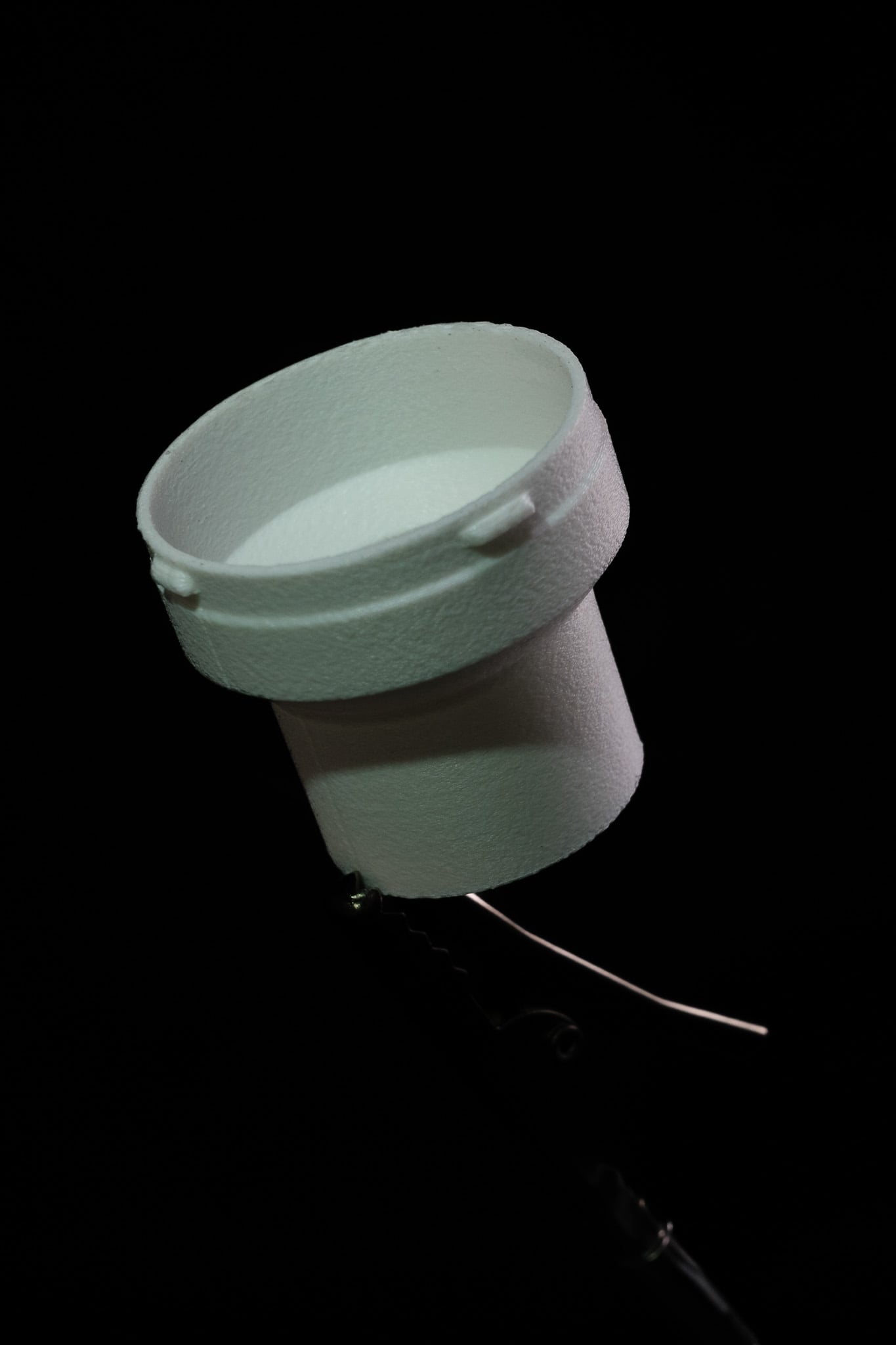
The finished adapter is a single printed part that takes under 10 minutes to produce. One end press-fits into the HumidX humidifier outlet, the other accepts a standard 22mm CPAP hose. No glue, no fasteners, no modifications to any existing equipment.
Outcome
A part that costs cents in material and minutes to print replaces a $150 proprietary mask kit. More importantly, it lets patients travel with the mask that works for them. The one they've already broken in, adjusted, and trust to seal properly through the night.
Lessons and take-aways
- Tolerances matter more than geometry. The shape is simple but getting the fit right consumed most of the prototyping time. Printing orientation, layer height, and material shrinkage all affect the final dimensions.
- Material selection. PLA, PETG, and ABS-GF all print the same geometry but behave completely differently in use. The operating environment (heat, moisture, mechanical stress) and print characteristics (warping, shrinking, tolerances) showed ABS and ABS-GF (glass fibre) to have the best results.
- Simple problems deserve simple solutions. The instinct is to over-engineer. This part has no threads, no clips, no moving pieces.